

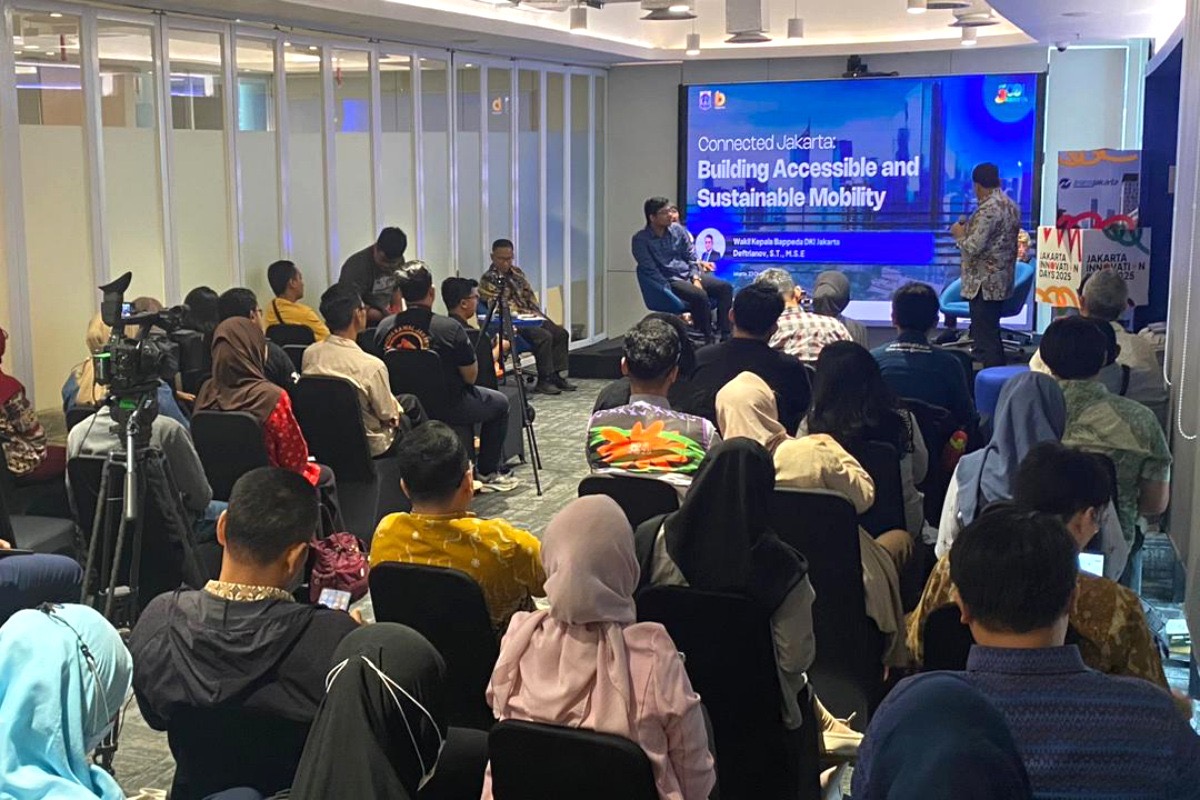
As part of the Jakarta Innovation Days 2025 series, a seminar titled “Connected Jakarta: Building Accessible and Sustainable Mobility” was held at the Dukuh Atas Transport Hub on Thursday (October 23). The event brought together speakers such as Head of Corporate Planning and Risk Management Division of Transjakarta, M Pandito Pratama; Deputy Director of the Institute for Transportation and Development Policy (ITDP) Indonesia, Deliani Siregar; Urban Development Senior Program Lead of World Resources Institute (WRI) Indonesia, Dimas Nu’man Fadhil; and Deputy Head of Jakarta Regional Development Planning Agency (Bappeda), Deftrianov. The discussion focused on inter-sector collaboration to create inclusive, environmentally friendly, and sustainable urban mobility. Each speaker highlighted the importance of innovation in shaping Jakarta’s future as a more connected and livable city.
Head of Transjakarta’s Planning and Risk Management Division, M Pandito Pratama, stated that sustainable mobility must begin with public transportation. He explained that private vehicles contribute heavily to emissions, while using Transjakarta’s electric buses could cut carbon output by up to 99 percent. Pandito also noted that bus electrification not only reduces emissions but lowers operating costs by about six percent. According to him, the key is not just replacing private vehicles with electric ones, but shifting public behavior toward embracing public transport.
Pandito mentioned that Transjakarta now operates over 420 electric buses and is developing a carbon credit system from the emission savings generated by these vehicles. He described this as a practical example of how transport innovation can deliver both environmental and economic benefits for the city.
Deputy Director of ITDP Indonesia, Deliani Siregar, added that transport integration and equal access between central and peripheral areas are essential for efficiency. She emphasized that better physical and institutional integration can encourage citizens to choose public transport as their main mode of travel.
Meanwhile, Deputy Head of Jakarta Bappeda, Deftrianov, asserted that developing public transport is not only about improving mobility but also about advancing sustainable economic growth. He said the local government is committed to expanding service coverage and strengthening systems that improve residents’ quality of life. According to Deftrianov, a robust and sustainable transport network supports Jakarta’s competitiveness as a global city. The seminar concluded with a shared call to ensure innovation and inclusivity remain at the core of Jakarta’s mobility transformation.
Alexander Jason – Redaksi
