

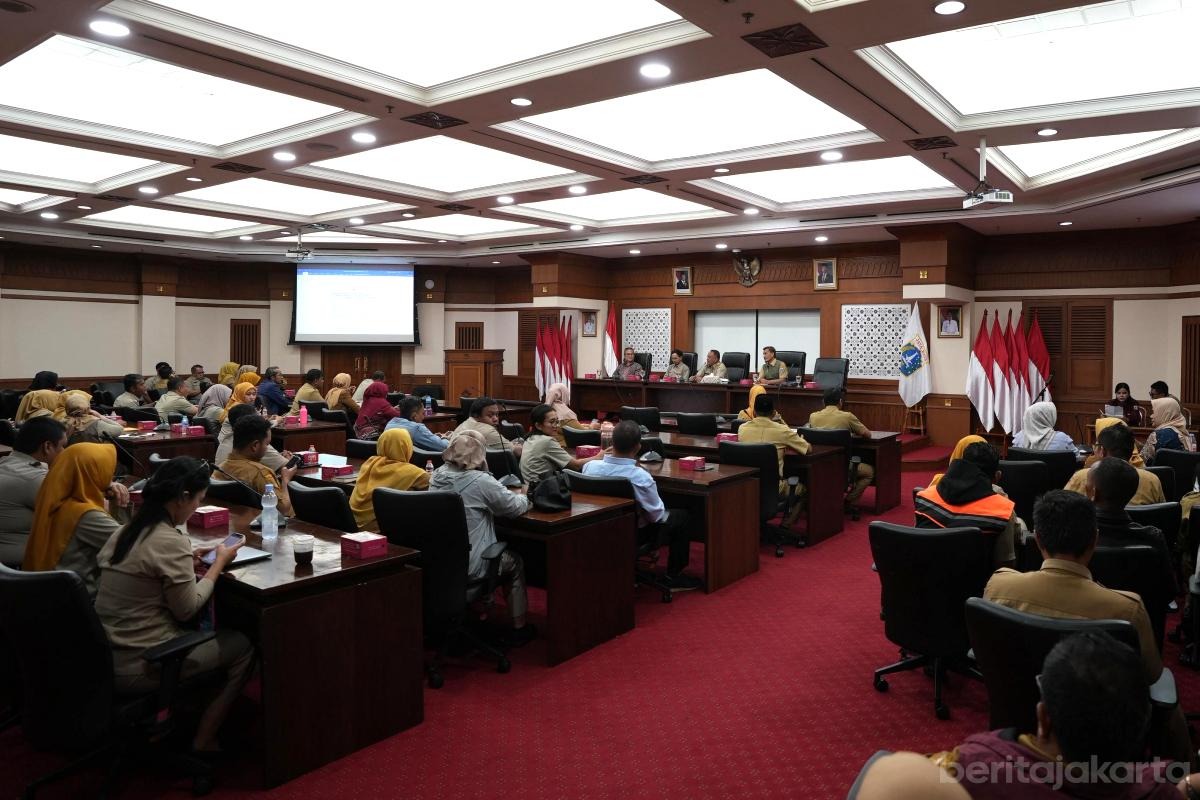
The West Jakarta City Administration held a socialization event for the Climate Village Program (ProKlim), targeting subdistrict heads, village officials, environmental units, community leaders, and environmental activists. The initiative emphasized waste sorting at the source as a key strategy to reduce the city’s overall waste burden.
Assistant for Economy and Development, Imron Syahrin, highlighted that residents must understand how to separate waste into four categories: organic waste for composting, inorganic waste for recycling through waste banks, hazardous (B3) waste, and residual waste. This effort is part of a broader push by the DKI Jakarta Provincial Government to minimize the volume of waste sent to Bantar Gebang Landfill.
Imron stressed that waste management must begin at the household level, noting that 60–70 percent of domestic waste comes from kitchen leftovers. To address this, the government is promoting both technological and simple processing methods, such as turning organic waste into compost or liquid fertilizer and using maggot cultivation for decomposition. These approaches aim to not only reduce waste but also create added value from materials that would otherwise be discarded. The program reflects a shift toward more sustainable and community-driven environmental practices.
Meanwhile, Head of the West Jakarta Environmental Sub-agency, Ahmad Hariadi, explained that the campaign is supported by a collaborative task force involving multiple stakeholders. These include local public service workers, environmental agency staff, neighborhood waste management units, waste bank operators, and community groups such as PKK and Dasa Wisma. The team is tasked with delivering consistent education on waste sorting through direct outreach, written materials, and online platforms to ensure widespread understanding and participation.
Overall, the initiative underscores the importance of collective responsibility in tackling urban waste challenges. By strengthening awareness, improving waste management practices, and fostering collaboration at the community level, the program aims to build a more sustainable urban environment. The continued rollout of education and engagement efforts is expected to play a crucial role in reducing landfill dependency and supporting long-term environmental resilience in West Jakarta.
Alexander Jason – Redaksi
