

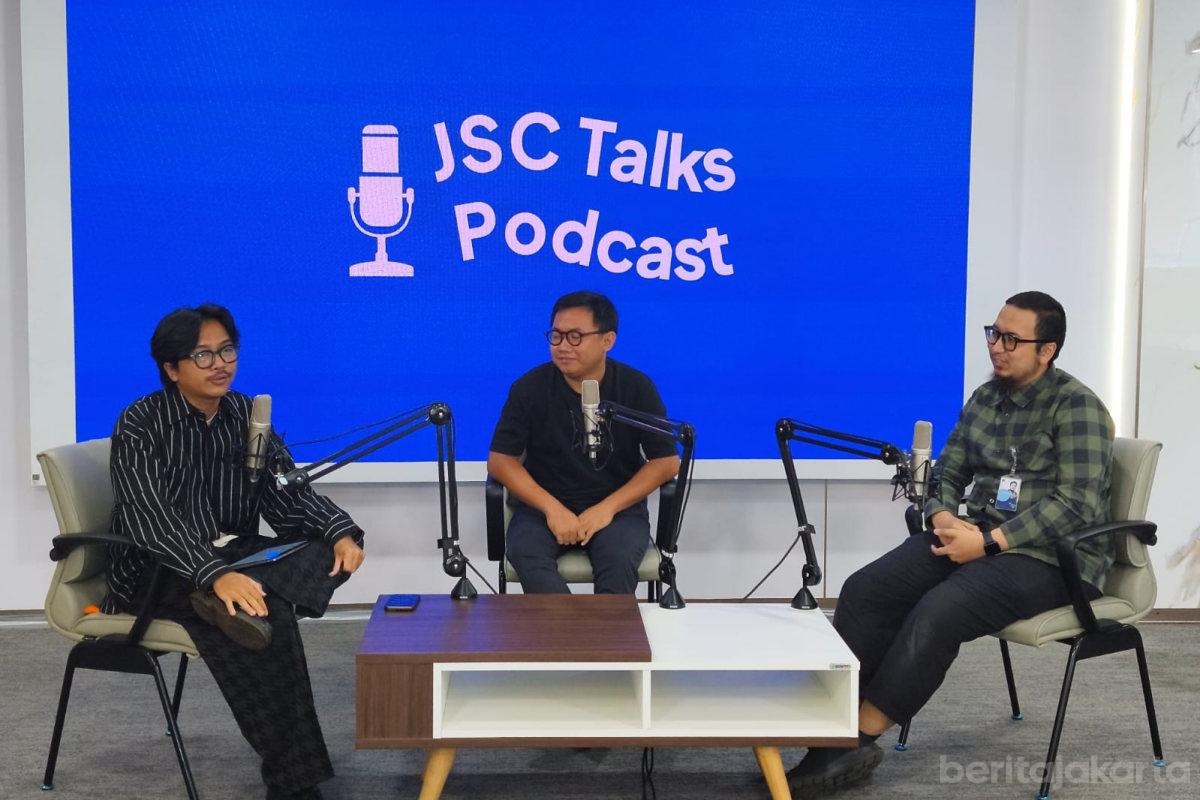
Jakarta Smart City once again hosted the JSCTalks Podcast Episode 25, highlighting ongoing efforts to address public complaints in the capital. The discussion featured Content Creator, M Rafli Zulkarnain, also known as Ijoel, alongside Operations and Response Manager, Saffar Masyhur, from Jakarta Smart City (JSC), an initiative focused on integrating digital solutions into urban governance. The episode explored the realities behind handling citizen reports, emphasizing both technological systems and human coordination. It framed public service responsiveness as a shared responsibility between government institutions and residents.
Saffar outlined that one of the most persistent challenges lies in cross-agency coordination, particularly when complaints involve overlapping jurisdictions between local and central authorities. He noted that infrastructure-related issues, such as road repairs, often require additional bureaucratic steps due to divided responsibilities. Despite these hurdles, the Provincial Government of DKI Jakarta continues to initiate immediate responses to mitigate on-ground problems. Saffar also highlighted that while the JAKI application has reached approximately seven million users, its adoption remains concentrated among individuals aged 20 to 35.
This imbalance in usage underscores a broader digital divide, prompting Jakarta Smart City to expand outreach efforts toward students and older populations. Saffar explained that technological access, particularly smartphone availability, remains a limiting factor, leading to initiatives in schools where digitally literate youth can help bridge the gap within families. All incoming reports, whether through JAKI or other channels, are processed via the Citizen Relationship Management (CRM) system, which organizes, verifies, and routes complaints to relevant agencies. The integration of geotagging and validation processes ensures that reports are both accurate and actionable, while public rating mechanisms add a layer of accountability.
The system’s efficiency is further reinforced by regulated response times, as outlined in the Secretary Decree Number 175 of 2025, which sets maximum handling durations depending on the issue. Waste-related complaints can be resolved within hours, while infrastructure repairs may take several days, reflecting the varying complexity of cases. Data from 2025 shows that road damage reports dominate submissions, reaching tens of thousands annually, while flood-related complaints present unique challenges due to their sudden and widespread nature. Both Saffar and Ijoel emphasized that effective complaint handling ultimately depends on active citizen participation, positioning public reporting as a modern expression of collective civic responsibility.
Alexander Jason – Redaksi
