

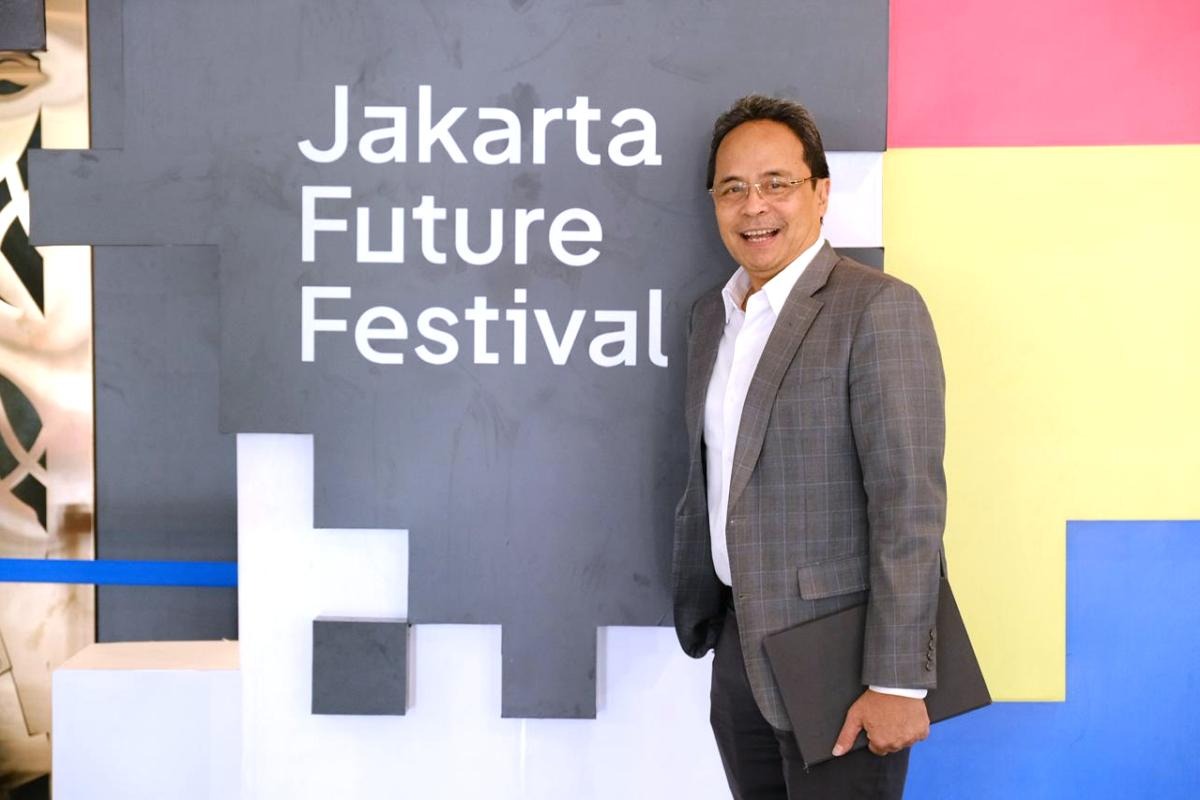
At the Jakarta Future Festival 2026, Bank Jakarta President Director Agus H Widodo outlined the bank’s vision of becoming a key connector within Jakarta’s future development ecosystem. Speaking at the Urban Talks BUMD forum in Taman Ismail Marzuki, he argued that a modern city should be measured not only by its infrastructure and technology, but also by how effectively it connects residents, businesses, investors, and government institutions. According to him, Jakarta’s greatest challenge is strengthening these relationships to create a more inclusive and integrated urban environment. Bank Jakarta aims to position itself as the city’s “Financial Operating System” in support of that goal.
Agus explained that the bank’s strategy is built around four main pillars. The first is financial inclusion, ensuring that all residents have easy, secure, and digital access to formal financial services. He noted that many Jakarta residents remain outside the formal banking system, making financial accessibility a major priority. The second pillar focuses on supporting micro, small, and medium-sized enterprises (MSMEs) by helping them enter digital ecosystems, expand market access, and strengthen supply chains. He emphasized that entrepreneurs need opportunities and connections in addition to financing.
The third strategic priority is housing inclusion, aimed at improving access to affordable home financing for Jakarta’s younger generation. Agus highlighted housing affordability as one of the city’s most pressing challenges and argued that financing solutions must become part of broader urban development planning. The fourth pillar centers on investment enablement, with Bank Jakarta seeking to strengthen investor confidence and attract sustainable capital into the city. He stressed that transforming Jakarta into a globally competitive city will require significant private investment alongside government funding.
Agus also underscored the principle of “no one left behind” as a foundation for digital transformation and urban progress. He warned that technological advancement without inclusivity could widen social and economic disparities, leaving small businesses, street vendors, and young families at a disadvantage. In his view, regional state-owned enterprises have evolved beyond traditional business functions and now serve as catalysts for broader economic and social development. Concluding his remarks, he said that while systems such as MRT Jakarta connect physical destinations, Bank Jakarta seeks to connect life opportunities, helping build a resilient, smart, and globally competitive city that offers equal opportunities to all residents.
Alexander Jason – Redaksi
