

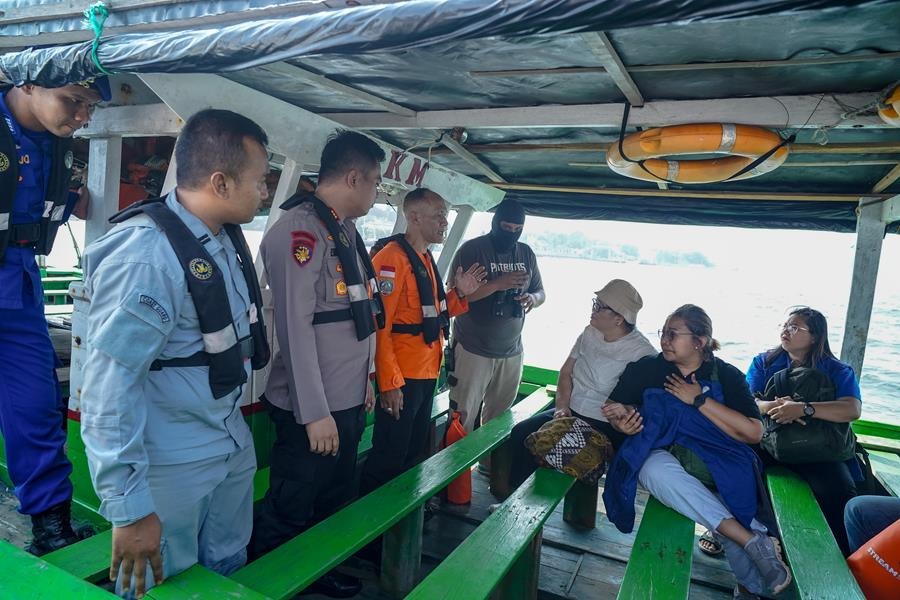
The U.S. Department of State’s Bureau of International Narcotics and Law Enforcement Affairs (INL) and the International Organization for Migration (IOM) have tested a new mobile application designed to help Indonesian law enforcement identify victims of human trafficking, including forced labor on commercial fishing vessels. The trial took place aboard an Indonesian National Police vessel at Tanjung Priok Port in North Jakarta on June 6. The initiative reflects ongoing cooperation between the United States and Indonesia to strengthen maritime security and improve efforts to combat trafficking crimes at sea.
The application, called PESISIR (Monitoring and Screening of Human Trafficking Risk Indicators), is intended to assist Marine and Air Police personnel in detecting potential trafficking victims among fishing vessel crews. INL Director at the U.S. Embassy, Aqueelah Johnson, said the United States is proud to support Indonesia’s efforts to address maritime threats and human trafficking. She added that stronger maritime security contributes to the protection of important international trade routes and supports a free and open Indo-Pacific region.
Developed through a 33-month partnership between INL and IOM, the web-based platform includes audio support in eight languages: Indonesian, English, Vietnamese, Thai, Khmer, Burmese, Tagalog, and Simplified Chinese. The multilingual capability recognizes that trafficking victims often come from different countries and that these crimes can have wider regional impacts. The application was refined through consultations and simulation exercises involving Indonesian law enforcement agencies.
Following the completion of the project this month, the PESISIR application will be made available to several Indonesian institutions, including the Indonesian National Police, the Indonesian Maritime Security Agency (BAKAMLA), and the National Search and Rescue Agency (Basarnas). The platform is expected to support case documentation and investigations involving maritime crimes. Officials believe the initiative will strengthen efforts to combat illegal fishing operations that exploit workers, while also helping disrupt transnational criminal networks operating across maritime borders.
Alexander Jason – Redaksi
