

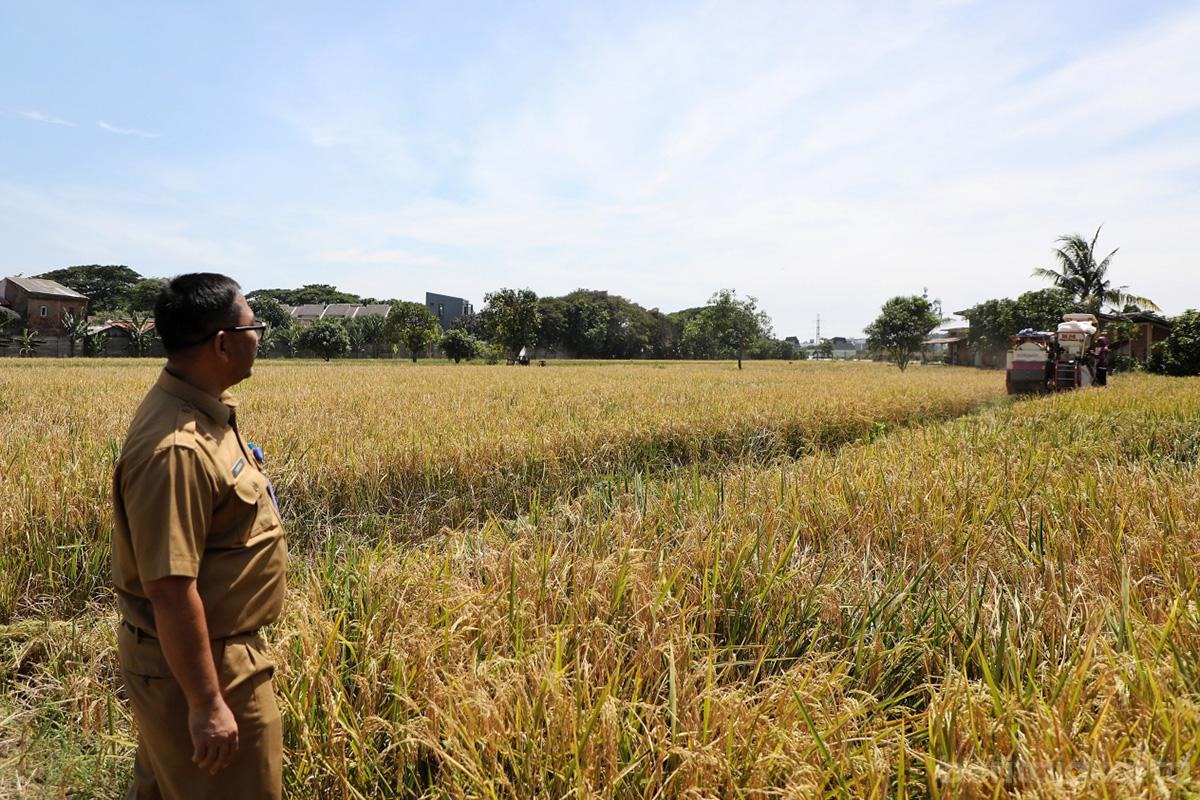
The Jakarta Provincial Government has confirmed that the ongoing dry season has not significantly affected the capital’s agriculture, fisheries, or food supply. Nevertheless, authorities have implemented a range of mitigation measures to safeguard production and ensure food availability remains stable.
Head of Jakarta’s Food Security, Marine, and Agriculture Agency (KPKP), Hasudungan Sidabalok, said the agency has prepared comprehensive strategies across its sectors to minimize the impact of prolonged dry weather. According to him, these efforts are intended to keep agricultural production, fisheries, and food security operating normally throughout the dry season.
In the agricultural sector, the KPKP manages 14 plant nurseries covering a combined area of 81.4 hectares, producing an average of 74,000 productive seedlings each year, including fruit trees, vegetables, rice, and orchids. To maintain production during the dry season, irrigation needs are met through reservoir water and deep-well pumping systems.
Meanwhile, approximately 220 hectares of rice fields in North Jakarta are expected to achieve higher yields during the dry season, as lower rainfall creates more favorable growing conditions. These measures are aimed at ensuring agricultural productivity remains resilient despite seasonal challenges.
The fisheries sector has also introduced preventive measures to maintain production quality. Jakarta currently operates four fish hatcheries with a total of 303 ponds, where monthly fish seed production normally reaches between 410,000 and 450,000 fry. During the dry season, however, production is expected to decline to around 380,000 fry due to reduced water availability from rivers and groundwater. To address this, the agency conducts regular water quality monitoring, adjusts fish stocking densities, provides high-quality feed during cooler hours, strengthens biosecurity measures, removes sediment before the dry season, and installs shading over ponds to protect aquatic conditions.
On the food security front, the provincial government reported that supplies of essential food commodities remain stable despite modest price fluctuations. Prices of eggs and chicken meat have risen slightly, while several horticultural products, including shallots and various types of chili peppers, have become more affordable due to abundant supply. Officials believe the current balance between supply and demand has helped prevent major price volatility across the capital. The KPKP will continue monitoring food distribution and market conditions to ensure stable supplies, smooth distribution, and affordable prices for Jakarta residents throughout the dry season.
Alexander Jason – Redaksi
