

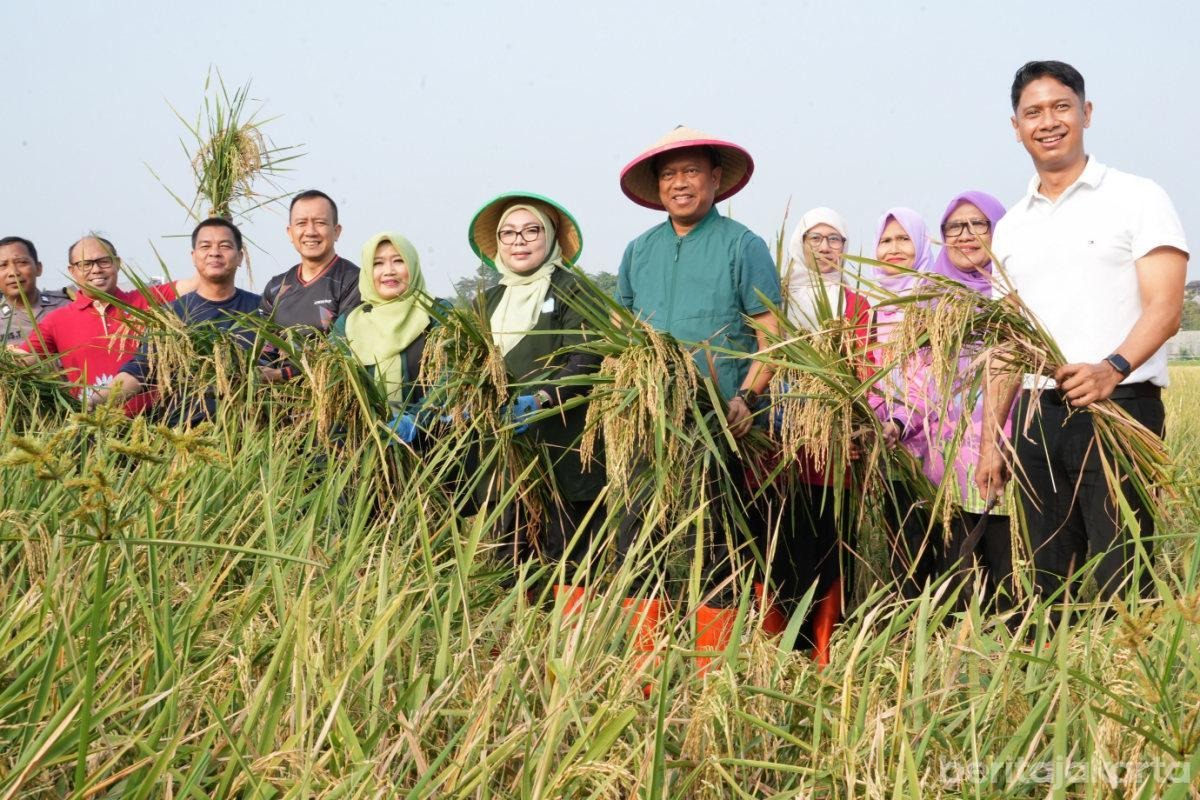
East Jakarta Mayor Munjirin led the harvest of rice and corn at the Baliku Lestari Farmers Group’s urban farming site in Ujung Menteng, Cakung, marking the second successful harvest from the 2.5-hectare agricultural area. The land produced around 10 tons of rice and 2.5 tons of corn after a three-month growing period, demonstrating the continued potential of urban farming to strengthen local food resilience. Munjirin encouraged residents to make better use of available land and home gardens to cultivate food crops for community consumption. He added that expanding urban agriculture could help improve food security and create a more balanced and sustainable food supply across Jakarta.
The Mayor emphasized that the harvested corn is intended for livestock feed rather than human consumption, highlighting the role of urban agriculture in supporting multiple sectors of the food system. The harvesting event was attended by East Jakarta officials, sub-district heads, village heads, and representatives from the local Family Welfare Movement (PKK), reflecting the government’s commitment to promoting community-based farming initiatives. According to Munjirin, continued support from local authorities is essential to ensure these programs remain productive and beneficial for residents. He expressed hope that similar projects would continue to expand throughout the capital.
Baliku Lestari Farmers Group Chairman Aiptu Sulistiyo expressed appreciation for the ongoing assistance provided by the East Jakarta administration, saying the support had contributed significantly to the project’s success. He noted that this was the group’s second harvest, with results that exceeded expectations and demonstrated the value of sustained collaboration between the government and local farming communities. The program showcases how unused urban land can be transformed into productive agricultural spaces that contribute to food production. It also serves as an example of how community participation can strengthen Jakarta’s long-term food resilience.
The harvest reflects Jakarta’s broader efforts to promote urban agriculture as part of its food security strategy while maximizing the use of limited land within the city. Beyond increasing agricultural output, initiatives like the Baliku Lestari farming project encourage residents to participate in sustainable food production and environmental stewardship. Continued government support, combined with active community involvement, is expected to help expand similar projects in other areas of the capital. Through these efforts, Jakarta aims to build a more resilient and self-sustaining urban food system while improving the welfare of local communities.
Alexander Jason – Redaksi
