

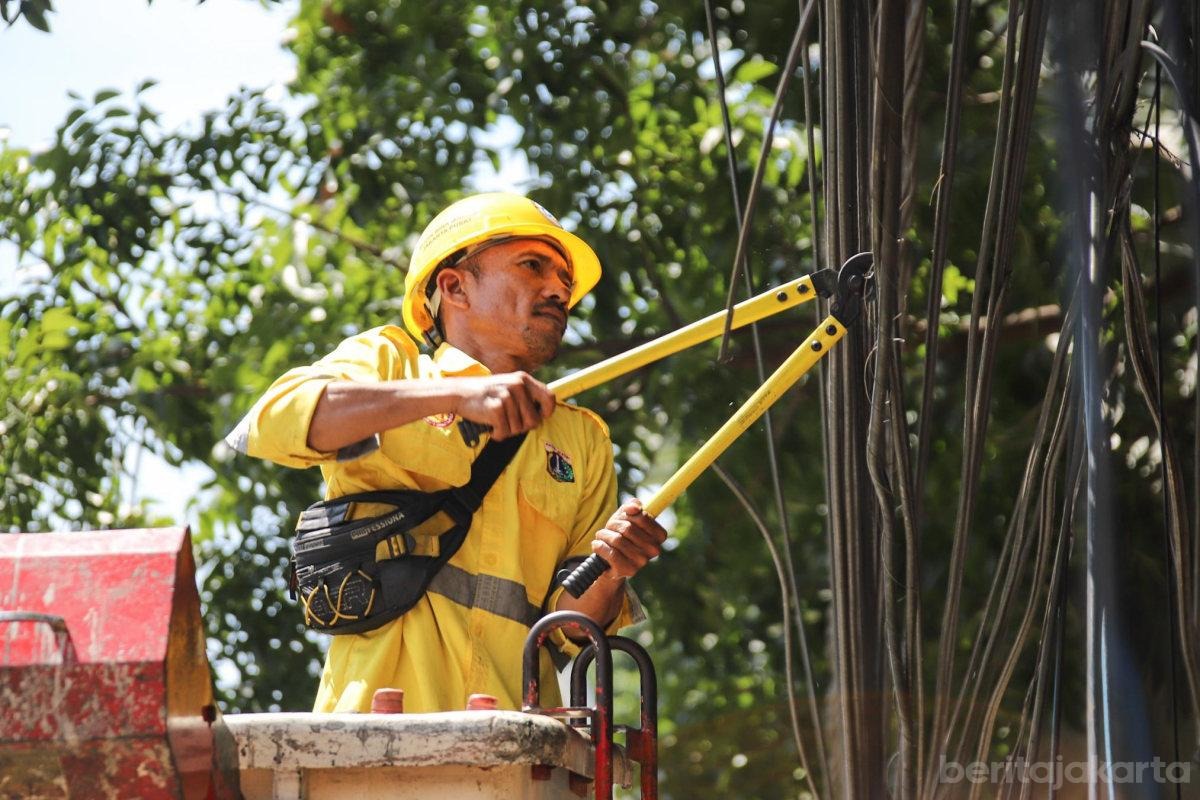
As Jakarta approaches its five-century milestone, the Jakarta Provincial Government has launched the 5M Movement to organize tangled overhead utility cables and improve safety for road users. The initiative consists of Using Integrated Utility Network Facilities (SJUT), conducting independent relocations, securing active overhead cables, cutting nonfunctional cables, and raising cables that hang too low. Chair of the Jakarta DPRD Commission D, Yuke Yurike, urged the movement to become a concrete step toward accelerating the relocation of utility cables underground. She said Jakarta, as a modern city, needs utility networks that are properly organized rather than scattered across public spaces.
Yuke noted that Jakarta already has a regional regulation governing utility network arrangements, while its Governor Regulation and related implementing rules are being finalized. She argued that once those regulations are completed, there should be no further justification for delaying the relocation of overhead cables. However, she emphasized that the Jakarta Government cannot carry out the work alone and called for stronger participation from utility operators and private companies through independent relocation. Greater involvement from these parties, she said, could accelerate the city’s effort to reorganize its utility infrastructure.
Relocating electricity cables operated by state utility company PLN presents additional challenges because of electrical safety risks. PLN is reportedly still conducting studies and trials to ensure that underground relocation does not create dangerous electrical induction. Yuke also called for SJUT construction to be coordinated with other utility projects, including water networks, so residents are not repeatedly disrupted by excavation work. She hopes planned SJUT construction can be completed this year, with broader involvement from third parties beginning in 2027 if government funding is insufficient.
Yuke said utility cable management should improve not only Jakarta’s appearance and public safety but also potentially generate additional regional revenue. She stressed, however, that the cost of reorganizing utility networks should not simply be passed on to residents through higher service tariffs. Internet and other service providers, she argued, should not use higher infrastructure costs as an automatic justification for raising prices. The broader goal of the 5M Movement is therefore to create a safer and more orderly utility network while ensuring that the financial burden of modernization does not fall disproportionately on the public.
Alexander Jason – Redaksi
