

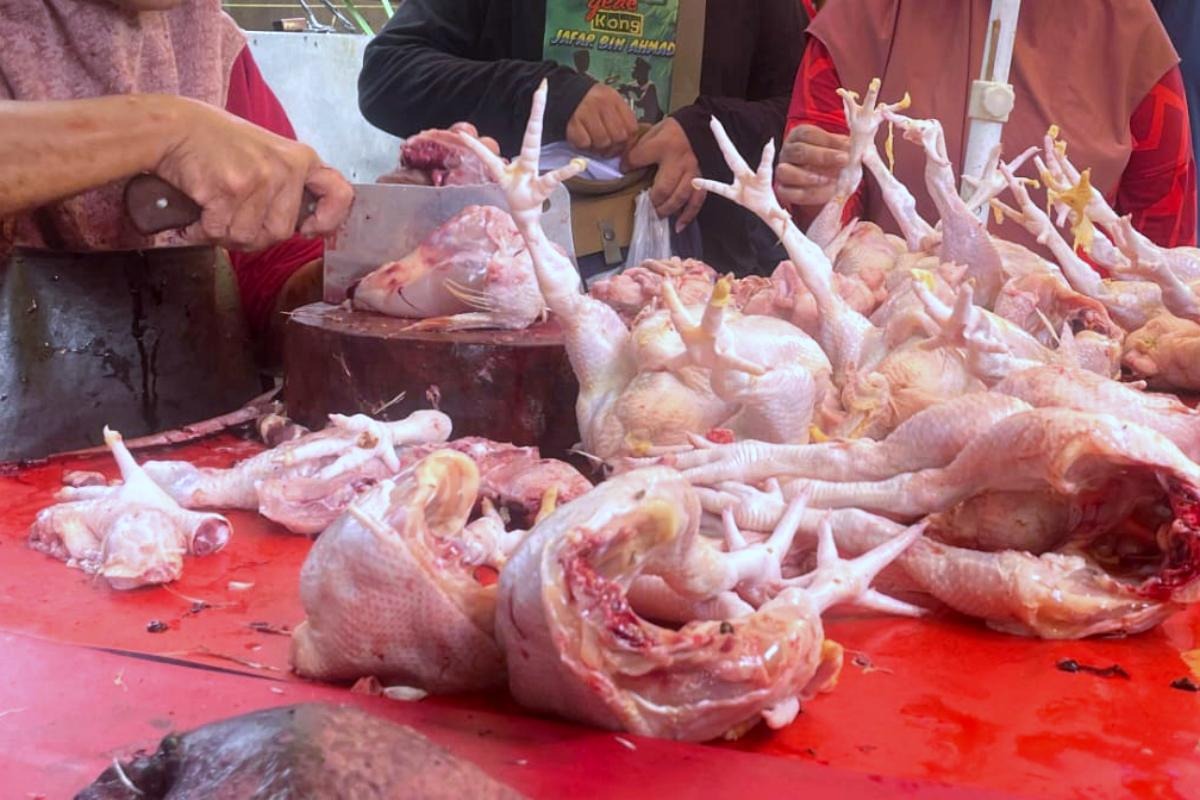
A swift intervention by regional food enterprise Perumda Dharma Jaya highlights the government’s growing urgency in stabilizing poultry prices at the upstream level. The move follows field findings that retail vendors were selling chicken at significantly inflated prices, driven by higher livebird costs sourced from suppliers at the Pulogadung slaughterhouse. This discrepancy underscored vulnerabilities in price control mechanisms within the supply chain. Left unchecked, such practices risk undermining affordability for consumers, particularly ahead of major religious festivities.
In response, Perumda Dharma Jaya issued a formal directive aligned with the Food Violation Eradication Task Force (Satgas Saber Pelanggaran Pangan) under the National Food Agency (Badan Pangan Nasional or Bapanas). The directive referenced official pricing guidelines while reinforcing supervision and outreach to tenants operating within the Pulogadung slaughterhouse. Through direct engagement and on-site monitoring, the company sought to realign supplier behavior with regulatory standards. This coordinated approach reflects a broader institutional effort to close gaps between policy and market realities.
President Director, Raditya Endra Budiman, emphasized that intensive dialogue and two-way communication with tenants played a निर्णायक role in achieving price adjustments. Budiman noted that retail chicken prices, which had surged to Rp45,000 per kilogram, have now been reduced to a more controlled range between Rp38,500 and Rp40,500. He framed the outcome as a tangible reflection of compliance with National Food Agency Regulation No. 529 of 2024. The adjustment, in his view, restores a degree of balance between supply costs and consumer affordability.
Looking ahead, Budiman asserted that the company will intensify daily oversight across all slaughterhouse operations to ensure sustained compliance through the Idulfitri period. He warned that prices exceeding government benchmarks would not be tolerated within their operational scope. The case demonstrates how synergy between regionally owned enterprises and private operators can serve as an effective buffer against market distortions. Ultimately, such interventions aim to reassure the public that access to essential protein sources remains both stable and reasonably priced.
Alexander Jason – Redaksi
