

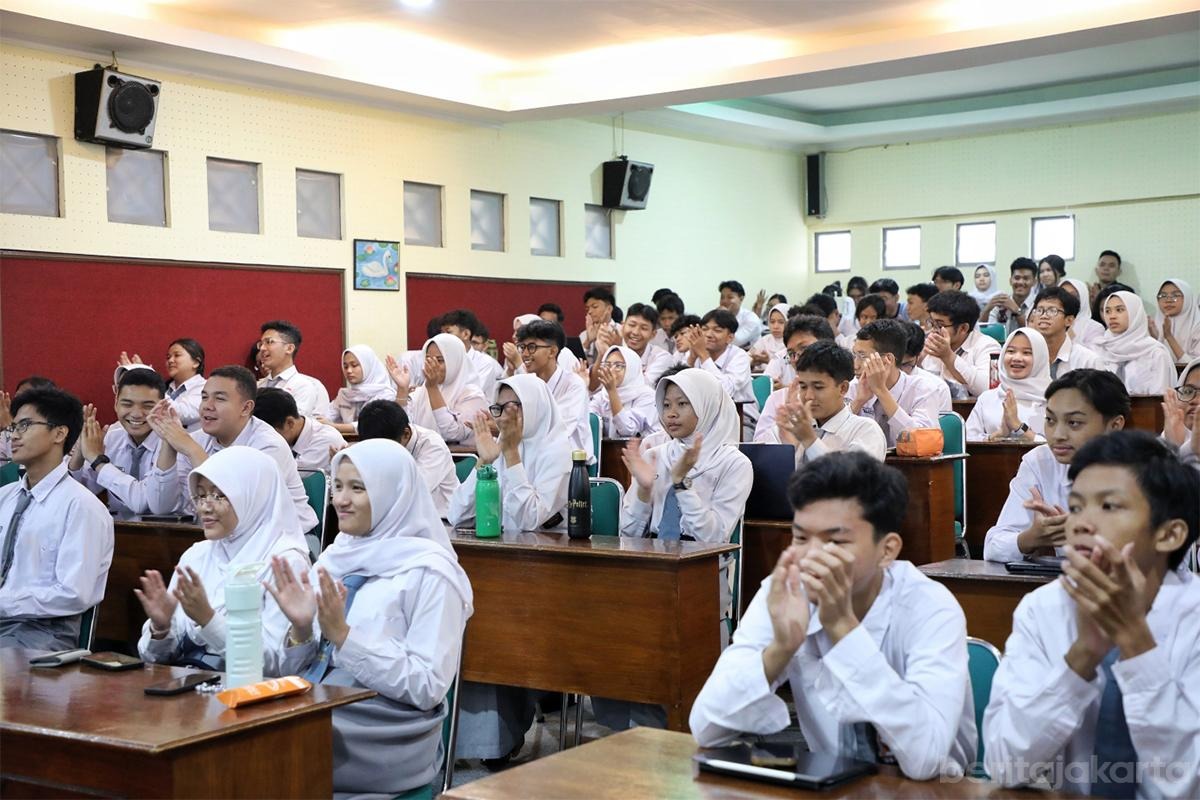
The Jakarta Provincial Government has officially introduced a free private school program, expanding access to education by allowing private institutions—from elementary to special education levels—to operate without charging tuition through government funding support. In its initial phase, the program covers 103 private schools across the capital’s five administrative regions. The initiative is positioned as a strategic response to limited capacity in public schools, which are only able to accommodate a portion of total student demand. By involving private institutions, the government aims to close the education access gap in the city.
Secretary of Commission C of the Jakarta Regional House of Representatives, Justin Adrian emphasized the importance of strict oversight to ensure the program is implemented as intended. He stressed that the term “free” must be upheld in practice, without hidden fees or additional charges imposed on students or parents. Public participation is also encouraged, with citizens urged to report any irregularities through official complaint channels. This reflects a broader push for transparency and accountability in education policy implementation.
Supervision by the Education Agency is considered critical to maintaining the program’s integrity and effectiveness. Authorities are expected to actively monitor participating schools and enforce compliance with regulations. In cases of violations, sanctions may range from formal warnings to further evaluation of the institution’s eligibility in the program. This regulatory framework is designed to ensure that public funds are used appropriately and that beneficiaries receive the intended support.
Looking ahead, lawmakers are advocating for an expansion of the program to include more schools, potentially reaching around 200 institutions. The initiative is seen as essential in meeting the growing educational needs of Jakarta’s population. With continued collaboration between the government and private sector, the program is expected to play a key role in improving educational equity. Ultimately, its success will depend on consistent oversight and sustained policy commitment.
Alexander Jason – Redaksi
