
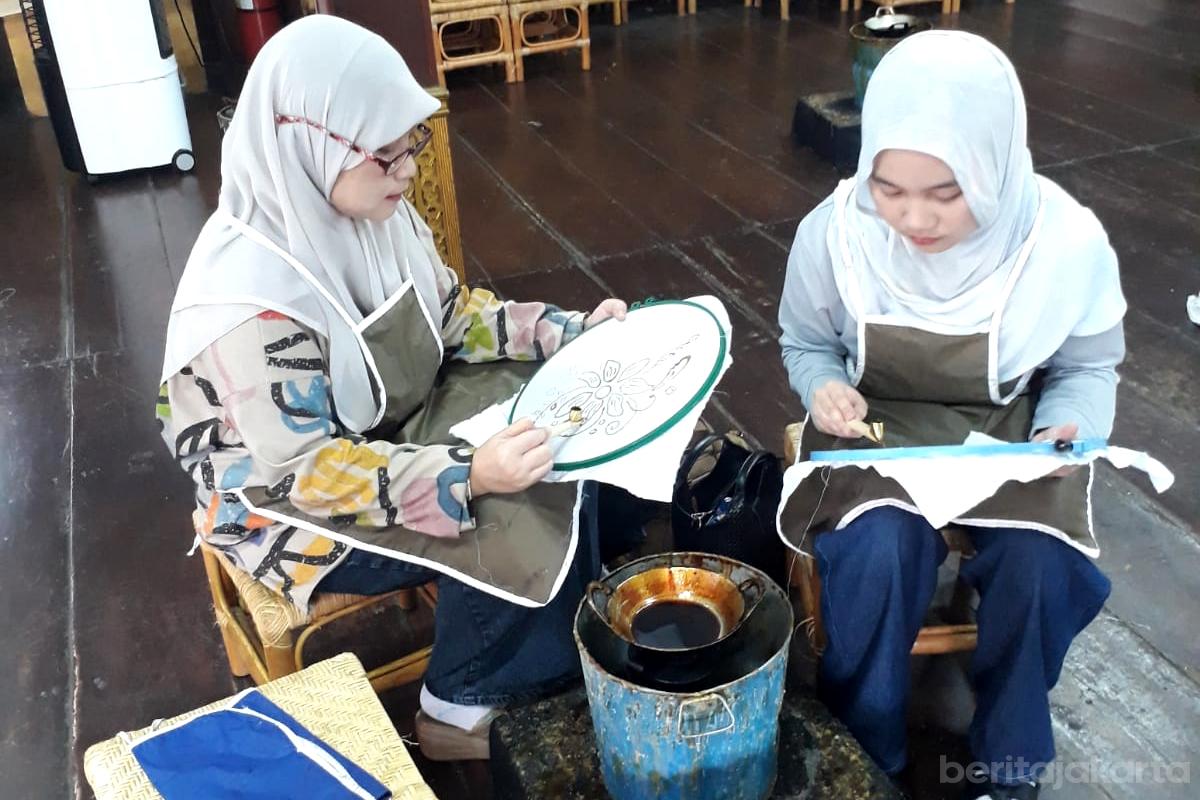
The management of Jakarta’s Textile Museum reported that 9,387 visitors participated in its batik workshops between January and June 2026, highlighting growing public interest in hands-on cultural education. Held every Tuesday through Sunday from 9:00 a.m. to 2:00 p.m., the workshops are designed to introduce participants to Indonesia’s batik heritage through practical learning. Head of the Fine Arts Museum Management Unit, Sri Kusumawati, said the program has been running for several years as an inclusive initiative to preserve and promote traditional culture.
Participants pay Rp50,000 to join a workshop and are allowed to take home the batik piece they create. The museum offers several techniques, including hand-drawn batik, stamped batik, ecoprint, and jumputan, also known as tie-dye. Visitors wishing to join workshops other than the standard hand-drawn batik session are required to make reservations in advance and select their preferred class. According to Sri Kusumawati, the program is intended not only to teach batik-making skills but also to strengthen appreciation for Indonesia’s cultural heritage.
In addition to the workshop fee, participants are required to pay the museum’s entrance ticket. On weekdays, admission costs Rp10,000 for adults, Rp5,000 for students and children, and Rp50,000 for international visitors. Weekend admission is slightly higher for adults at Rp15,000, while student, child, and international visitor rates remain unchanged. The museum also offers discounted package rates for groups of at least 30 people, making the program more accessible for educational institutions and organized tours.
The Textile Museum closes daily at 3:00 p.m. and is not open on Mondays. Museum management hopes the continued popularity of the workshops will encourage greater public appreciation of batik while helping preserve one of Indonesia’s most iconic cultural traditions. By combining education with interactive experiences, the museum aims to ensure that traditional craftsmanship remains relevant and accessible to future generations.
Alexander Jason – Redaksi
