

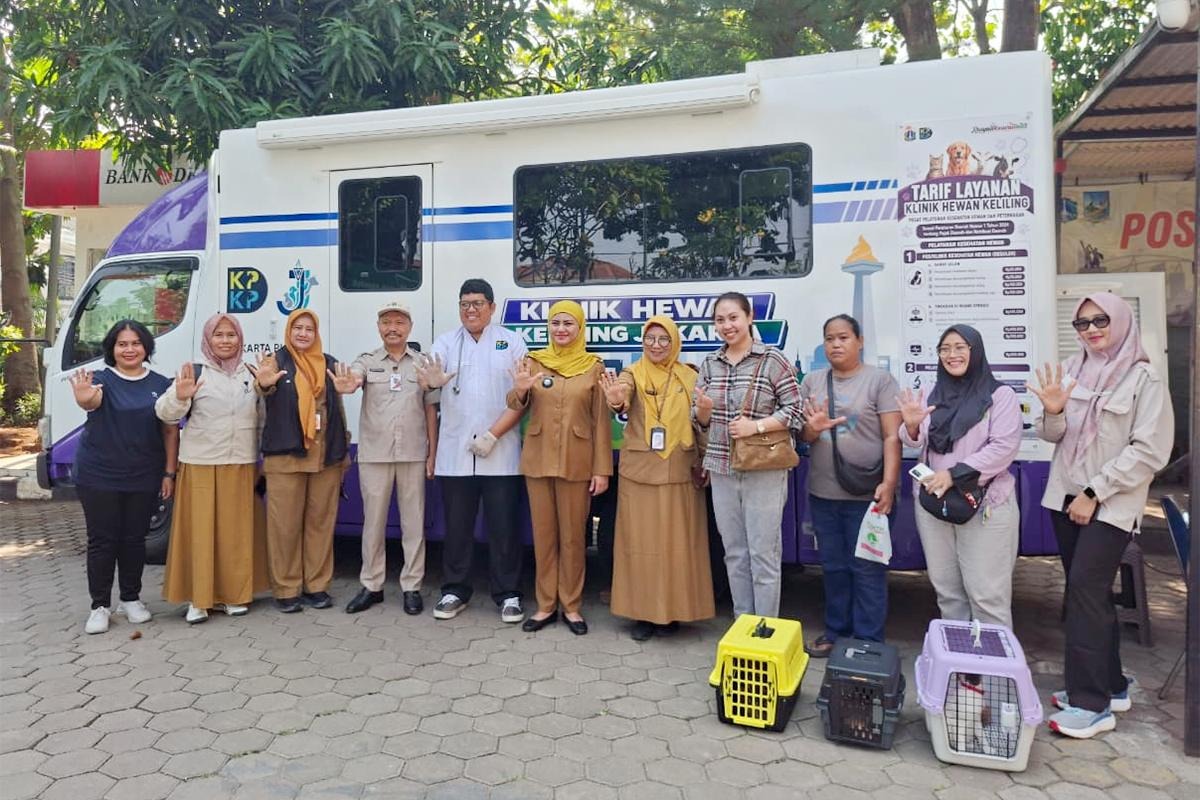
A total of 75 residents from three urban villages in Central Jakarta took advantage of the mobile animal clinic service held between July 13 and 17, 2026. The program was organized by the Central Jakarta Food Security, Maritime Affairs and Agriculture (KPKP) Sub-agency as part of its efforts to improve access to basic veterinary services for pet owners. The clinics were conducted in West Cempaka Putih Urban Village, the Dakota Kemayoran Flats, and Gunung Sahari Utara. Through this initiative, residents were able to have their pets examined without needing to visit a permanent veterinary facility.
Head of the Animal Husbandry and Animal Health Section of the Central Jakarta KPKP Sub-agency, Syafri Edward, said a total of 89 pets received health examinations during the five-day program. The animals consisted of six dogs and 81 cats, reflecting the high participation of cat owners in the service. The mobile clinic provides routine health checks as part of the local government’s efforts to promote responsible pet ownership and improve animal welfare. The program also helps strengthen disease prevention through regular veterinary monitoring within local communities.
Following the positive public response, the Central Jakarta KPKP Sub-agency will continue the mobile animal clinic service at six additional locations from July 20 to 31, operating daily from 8:30 a.m. to 2:30 p.m. The next schedule includes Gunung Sahari Utara Urban Village, Rustanti Johar Baru RPTRA, the Tanah Abang District Office yard, Petojo Utara Urban Village, the Kenari Urban Village Office, and the Kebon Sirih Urban Village Office. Expanding the service to more neighborhoods is expected to increase public access to affordable veterinary care. It also allows more pet owners to receive preventive health services for their animals.
The mobile clinic program forms part of the Jakarta Provincial Government’s broader commitment to supporting public health and animal welfare through accessible community-based services. By bringing veterinary care directly into residential areas, the initiative reduces barriers for pet owners while encouraging regular health monitoring for companion animals. Officials hope the continued expansion of the program will raise awareness about responsible pet care and contribute to healthier communities. Similar outreach efforts are expected to remain an important component of the city’s public service programs in the future.
Alexander Jason – Redaksi
