

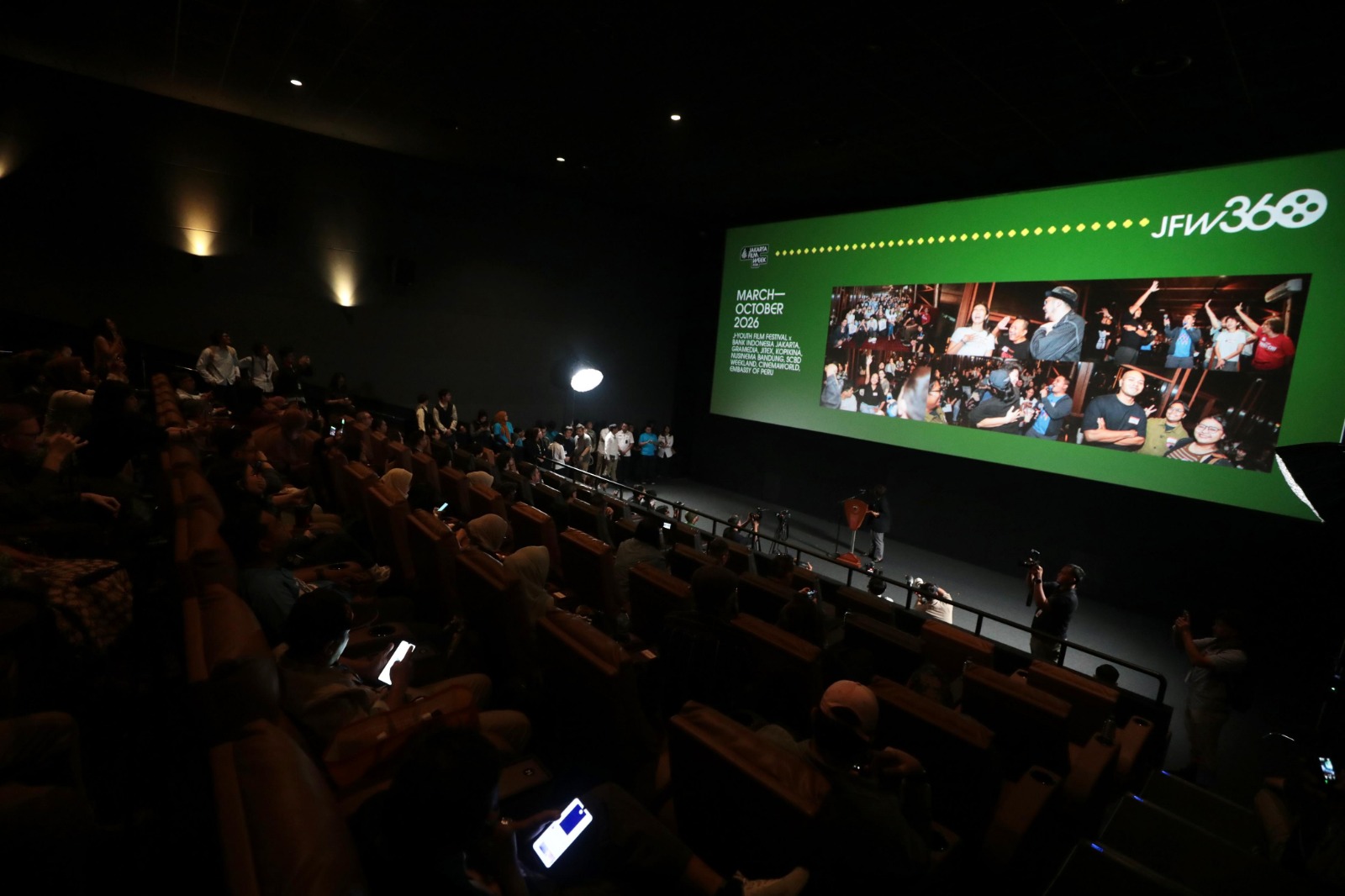
Jakarta Film Week (JFW) 2026 is set to take place from October 21 to 25, marking the festival’s sixth edition as Jakarta continues its push to become a city of cinema. Deputy Governor of Jakarta, Rano Karno, views the festival as an important part of that broader ambition, which he has described as a long-term goal for the capital. The 2026 edition carries the theme “Encounters,” positioning the festival as a meeting point for filmmakers, artists, audiences, and emerging generations in the film industry. Through these encounters, JFW aims to encourage networking, collaboration, and the development of new creative works.
This year’s festival received more than 1,200 film submissions from 82 countries, along with 180 proposals, reflecting the expanding international reach of the event. JFW 2026 will also introduce JFW Vision, a new program that allows visitors to experience films through virtual reality (VR) technology. Rano has emphasized that establishing Jakarta as a city of cinema requires more than holding an annual festival, pointing to the need for wider public access to cinemas and film appreciation spaces. The festival will be held across venues including CGV Grand Indonesia, Taman Ismail Marzuki, Mercure Jakarta Cikini, Paviliun Raden Saleh, Artotel Curated, and CGV FX Sudirman, while online screenings will also be available through Vidio.
Director General of Cultural Development, Utilization and Development at Indonesia’s Ministry of Culture, Ahmad Mahendra, described JFW as a hub connecting filmmakers, communities, government institutions, and international film networks. He said the festival’s continued development demonstrates collaboration between the central government, Jakarta administration, and the wider film community. Mahendra pointed to talents such as Khozy Rizal, as well as Annisa Adjam and Bagus Suitrawan, whose work has gained international recognition through the broader JFW ecosystem. The festival’s role therefore extends beyond screenings, serving as a platform for developing talent and connecting Jakarta’s filmmakers with international opportunities.
The Jakarta administration has also pursued wider measures to strengthen the city’s film ecosystem, including the launch of the Jakarta Film Commission and a one-stop service intended to simplify production-related information, coordination, and permits. These initiatives complement JFW by seeking to make Jakarta more accessible to filmmakers while expanding opportunities for production and collaboration. Mahendra has compared the longer-term vision to Edinburgh, where film and cultural festivals are spread throughout the city, although the comparison represents an aspiration rather than an established outcome. As JFW 2026 brings together filmmakers and audiences from Indonesia and abroad, the festival will provide another platform for Jakarta to develop its ambitions as a regional center for cinema.
Alexander Jason – Redaksi
